
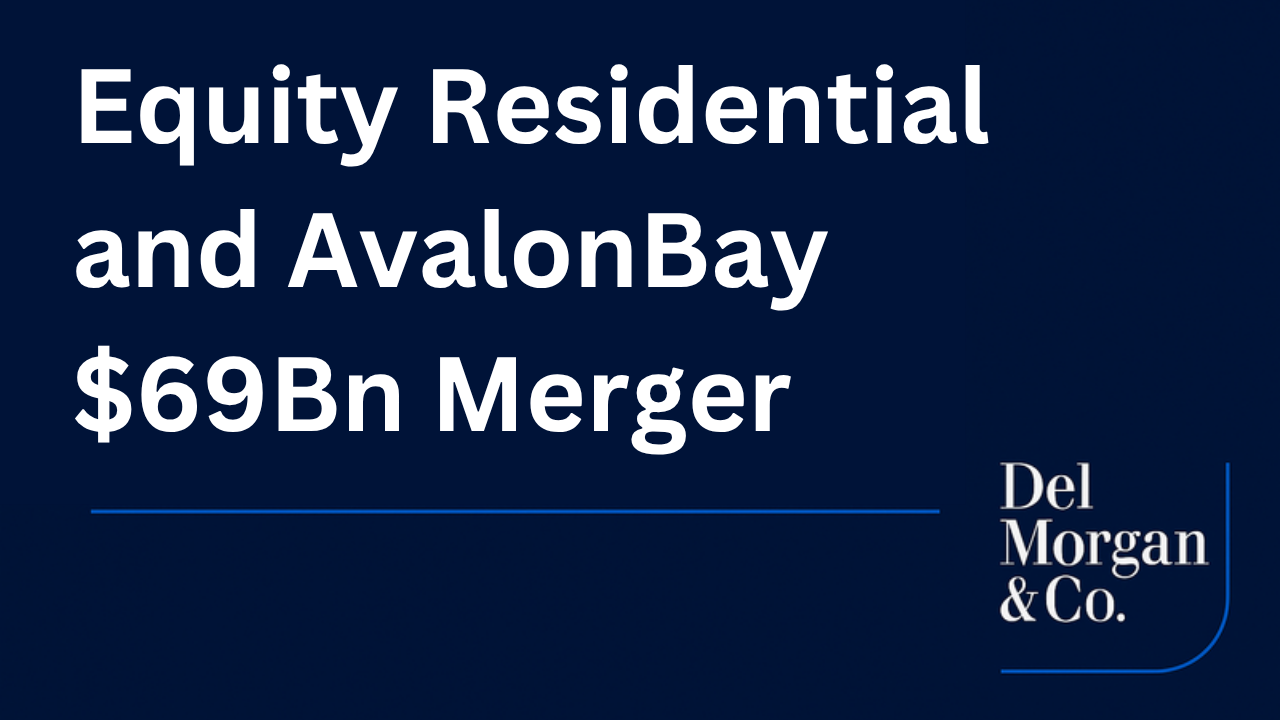
Equity Residential (NYSE: EQR) and AvalonBay Communities (NYSE: AVB) have agreed to combine in an all-stock merger of equals that would create one of the largest apartment owners in the U.S., with a pro forma equity market capitalization near $52Bn and a total enterprise value of approximately $69Bn. Under the agreement, announced on May 21, 2026, AvalonBay holders will receive 2.793 Equity Residential shares for each AvalonBay share, consideration valued at roughly $34.9Bn. AvalonBay shareholders would own approximately 51.2% of the combined company, with Equity Residential holders owning the remaining 48.8%. From an advisory perspective, the transaction is best understood as a consolidation of two leading coastal apartment owners into a single platform of meaningful scale, rather than as a conventional premium takeover. The combination may strengthen the resulting company’s development capacity and operating efficiency while raising integration and regulatory questions that will probably take time to resolve.
Deal Structure and Consideration
Under the agreement, AvalonBay shareholders will receive 2.793 shares of Equity Residential common stock for each AvalonBay share, implying a value of approximately $185.12 per share based on pricing at announcement. That figure represented a slight discount to AvalonBay’s prior close, an unusual feature that reflects the deal’s framing as a combination of comparably valued companies rather than an acquisition at a premium. The all-stock structure values AvalonBay at roughly $34.9Bn and creates a combined entity with a pro forma equity market capitalization near $52Bn and an enterprise value of approximately $69Bn. Equity Residential is reportedly paying around 18.7 times adjusted funds from operations (FFO), a multiple that situates the transaction within the range typical for high-quality multifamily portfolios. Because no cash will be changing hands, both shareholder bases retain exposure to the combined company’s performance, which may help align incentives across the two ownership groups.
Leadership and Governance
The transaction’s merger-of-equals character is most visible in its leadership arrangements. Benjamin Schall, currently chief executive of AvalonBay, is set to lead the combined company as president and chief executive, while Equity Residential’s Mark Parrell is expected to retire at close after nearly three decades with the firm. The combined company will be governed by a board of directors drawn from both organizations, and it will reportedly maintain dual headquarters in Chicago and the Washington, D.C. area. These arrangements suggest an effort to balance influence between the two shareholder groups rather than to subordinate one to the other. Interpreted broadly, the governance structure reinforces that the deal is a combination of peers, notwithstanding its legal form as an acquisition by Equity Residential.
Strategic Rationale and Scale
The combination would create one of the largest apartment owners in the U.S., with more than 180,000 rental homes concentrated in coastal and high-barrier metropolitan markets. Both companies have long focused on similar geographies, and the merger consolidates two complementary portfolios into a single operator with greater density in its core markets. Scale of this kind may allow the combined company to spread fixed operating costs across a larger base and to pursue development projects that neither firm could readily justify alone. Management has framed the transaction to expand margins and accelerate growth, a description that points to operating efficiency as a central rationale. The deal also arrives at a moment when for-sale housing affordability remains stretched, which may sustain institutional demand for professionally managed rental housing.
Synergies, Development and Technology
The companies have identified approximately $175MM in gross synergies and roughly $125MM in net synergies after real estate tax reassessments, figures they attribute largely to operating efficiencies. The combined entity would carry a development pipeline of approximately $4.4Bn covering roughly 10,800 homes, alongside additional development rights that could support further construction over time. Management has indicated an intention to increase development activity meaningfully, supported by combined annual cash flow of around $2Bn and a self-funding capacity that reduces reliance on external capital. The two companies have also pointed to shared investment in technology, including an AI platform for resident interactions, to apply tools at a scale that would be difficult for either firm independently. These elements suggest that the strategic case rests as much on growth and operating leverage as on cost reduction.
Market and Regulatory Considerations
For the multifamily sector, the transaction reinforces a trend toward consolidation among large institutional owners seeking scale in supply-constrained markets. The combined company would hold a substantial position in several coastal metropolitan areas, which could draw review from antitrust authorities assessing concentration in specific local rental markets. Because the deal is all-stock and structured as a merger of equals, it avoids some of the financing risk associated with leveraged acquisitions, though it remains subject to shareholder votes and customary approvals. The slight discount to AvalonBay embedded in the exchange ratio may also invite scrutiny from some shareholders weighing the merits of the combination against standalone prospects or a full-sale alternative. How regulators and investors respond will probably influence the timeline and the certainty of completion.
Outlook
The proposed combination illustrates how leading apartment owners are pursuing scale to support development and operating efficiency in markets where new supply is difficult to add. Whether the merger delivers the growth and margin benefits its sponsors anticipate will depend on integration, the retention of key personnel and the combined company’s ability to execute an expanded development program. The merger-of-equals structure, balancing ownership and governance between the two groups, suggests a measured approach to bringing together two comparable platforms. For now, the transaction stands as a clear example of consolidation aimed at building scale in coastal rental housing, a dynamic that may prove instructive as other large owners weigh similar moves. DelMorgan will continue to monitor the deal as it advances through shareholder and regulatory review toward completion.
About DelMorgan & Co. (www.delmorganco.com)
With over $300 billion of successful transactions in over 80 countries, DelMorgan‘s Investment Banking professionals have worked on some of the most challenging, most rewarding and highest profile transactions in the U.S. and around the globe. DelMorgan specializes in capital raising and M&A advisor services for companies across all industries and is recognized as one of the leading investment banking practices in California and globally.
Learn more about DelMorgan’s Capabilities, Transactions, and why DelMorgan is ranked as the #1 Investment Bank in Los Angeles and #2 in California by Axial.
News + Insights


IonQ to Acquire Elisity for Up to $1.3Bn